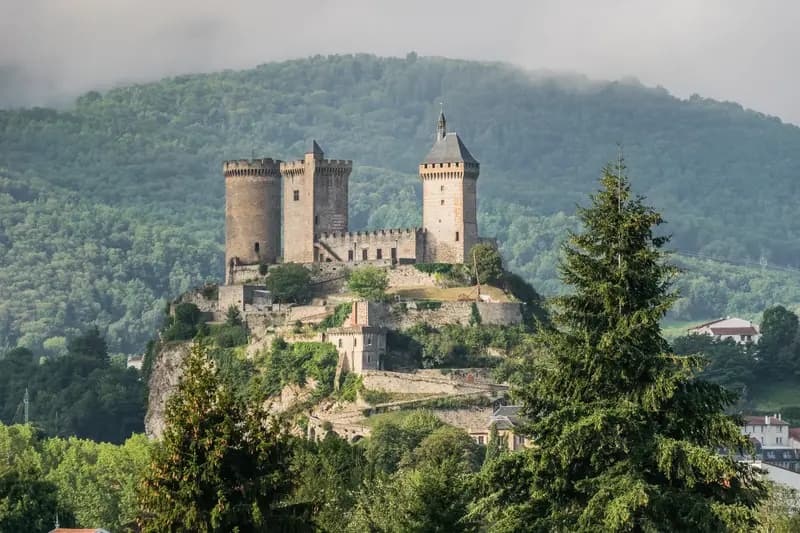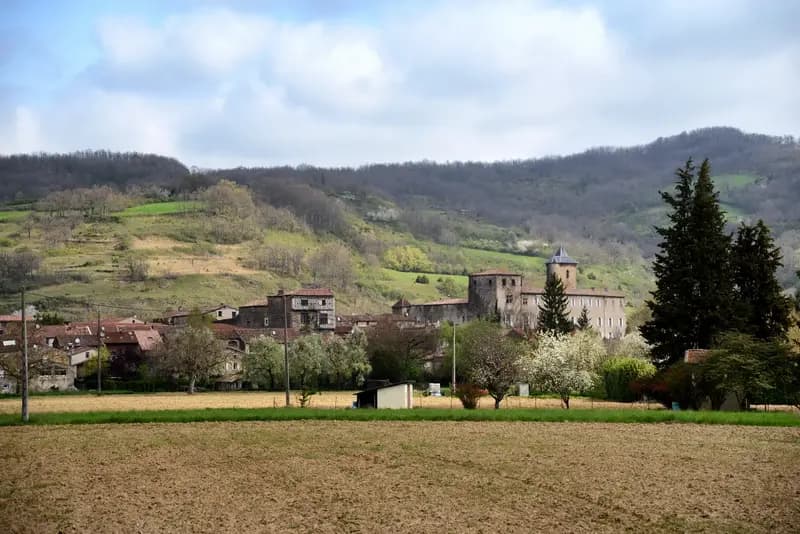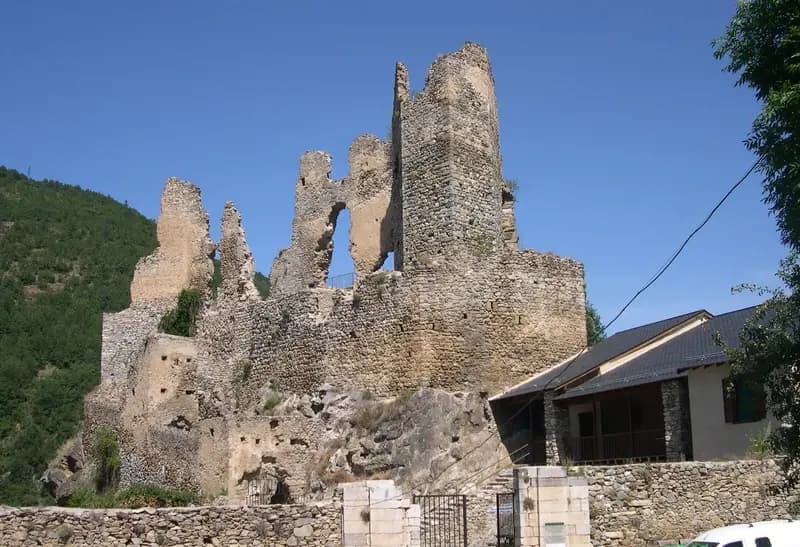
Ariège possesses one of the richest Romanesque heritages in the south of France. Between the 10th and 13th centuries, dozens of churches, chapels and abbeys were built in the Pyrenean valleys and across the foothills. Many have survived to the present day in a remarkable state of preservation. Visiting these buildings means plunging into the medieval history of the region and discovering an architectural art that is austere, powerful and deeply rooted in the landscape.
The church of Unac: a jewel of Romanesque art in Ariège
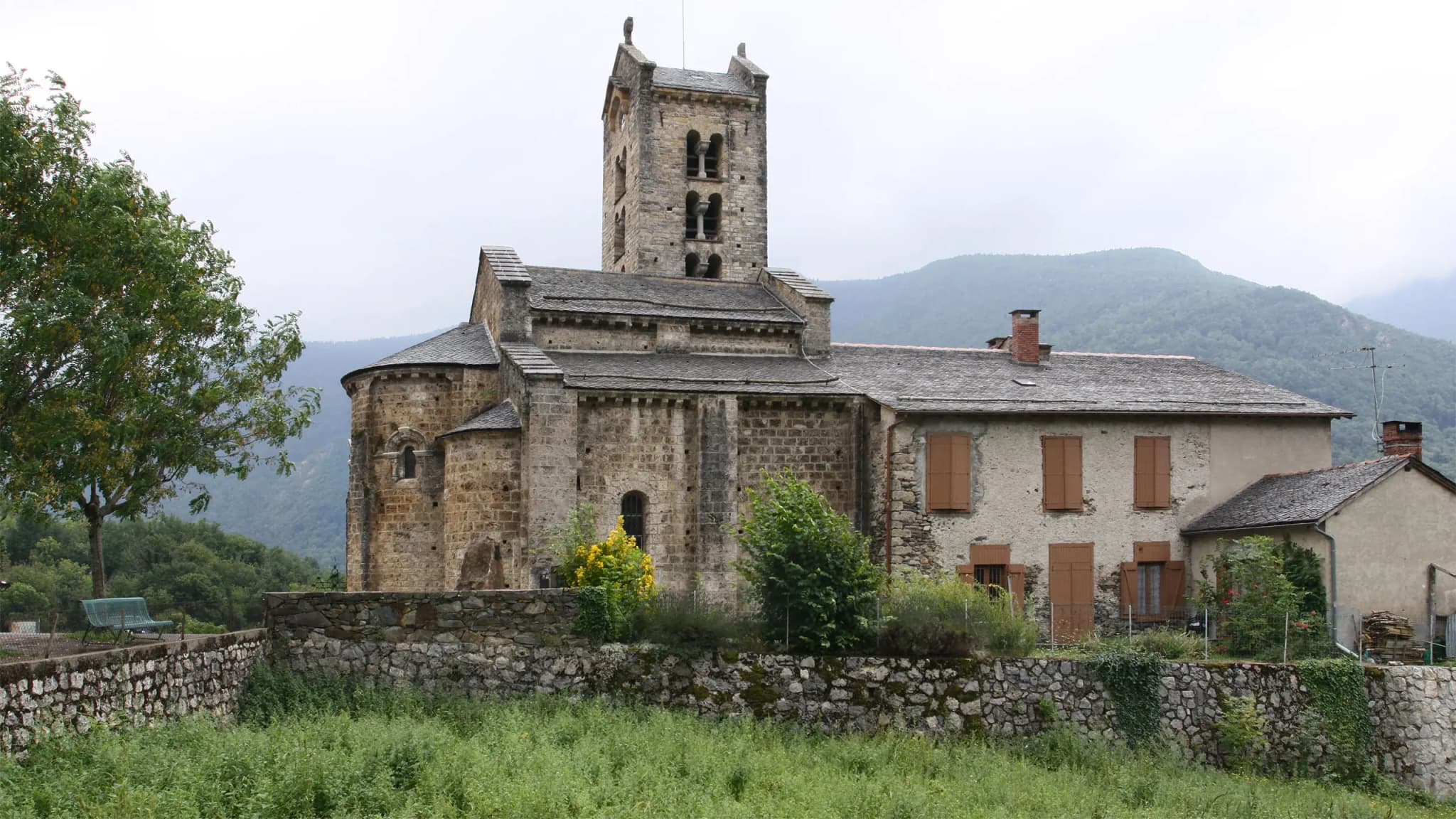
The church of Saint-Martin d'Unac, in the Ariège valley, is considered one of the finest examples of Romanesque architecture in the department. Its austere facade and harmonious proportions are characteristic of Pyrenean Romanesque. Inside, the sculpted capitals feature plant and animal motifs of great refinement. The trilobate apse is particularly elegant.
The rock-cut church of Vals: carved into the cliff
The church of Vals is a unique site. Built into a cliff face, it unfolds over three levels: a semi-troglodytic lower church carved from the rock, an intermediate church and an upper chapel. The 12th-century frescoes, depicting biblical scenes, are among the oldest in Ariège. The access through a narrow passage in the rock adds to the mysterious character of the place.
Other remarkable Romanesque churches
- Cathedral of Saint-Lizier: this episcopal complex is listed as a UNESCO World Heritage Site as part of the routes to Santiago de Compostela. The Romanesque cloister and 12th-century frescoes are exceptional
- Chapel of Sainte-Foi: located in the commune of Sainte-Foi, this small Romanesque building is an understated but touching witness to local medieval religious architecture
- Church of Mérens-les-Vals: in the upper Ariège valley, this Romanesque church offers a spectacular mountain setting
- Church of Luzenac: its sculpted portal and bell-wall are typical of the Ariège Romanesque style
- Abbaye de Combelongue: founded in the 12th century, its remains bear witness to the monastic wealth of the region
Pyrenean Romanesque art: architectural characteristics
The Romanesque art of Ariège is distinguished by its austerity and integration into the landscape. The materials are local: granite, schist, limestone. Bell-walls, typical of the Midi, dominate the villages. Portals are often adorned with simple but expressive sculptures. Interior frescoes, where they have survived, display rich and colourful iconography. This austere architecture contrasts with the more ornate Burgundian or Auvergnat Romanesque styles.
Suggested itinerary: circuit of Romanesque churches in Ariège
From Domaine de la Trille in Sainte-Foi, you can organise a multi-day discovery circuit of Romanesque heritage. Start with the foothills churches (Vals, the Mirepoix area), then head up towards upper Ariège (Unac, Mérens) and the Couserans (Saint-Lizier). Each stage allows you to combine a church visit with the discovery of a village, landscape or natural site.
Tip: some Romanesque churches are closed outside of organised visits. Check with local tourist offices for opening times and available guided tours.
Staying at Domaine de la Trille
Domaine de la Trille, in Sainte-Foi (09500), is an ideal starting point for exploring Ariège's Romanesque heritage. Located approximately 5 minutes from Mirepoix and about 1 hour from Toulouse, it allows you to range across the entire department. After a day of cultural visits, return to the comfort of your caravan or gîte and savour the peace of the 240-hectare estate.
- Address: Domaine de la Trille, 09500 Sainte-Foi
- Gypsy caravans and gîtes for 2 to 4 people
- Rate: from 90€/night, -20% from 3 nights
- HVE level 3 certified farm, Bienvenue à la Ferme labelled
Discover the Romanesque heritage of Ariège from Domaine de la Trille. Gypsy caravans and gîtes facing the Pyrenees, from 90€/night.
View availability